
 Deutsch
 English
Solution
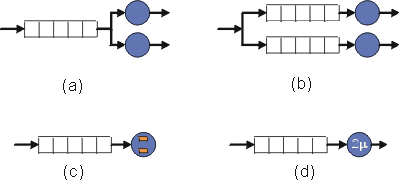
| E[N] = 5.64 | E[N] = 9.90 | |
| (a) | (b) | |
| E[N] = 6.35 | E[N] = 4.95 | |
| (c) | (d) |
The example shows that a common queue is more favorable than two separate queues and that one machine twice as fast is better than two parallel machines half as fast. On the other hand, two parallel machines perform better than a single machine that can process two parts at the same time. Did you know that?