
 Deutsch
 English
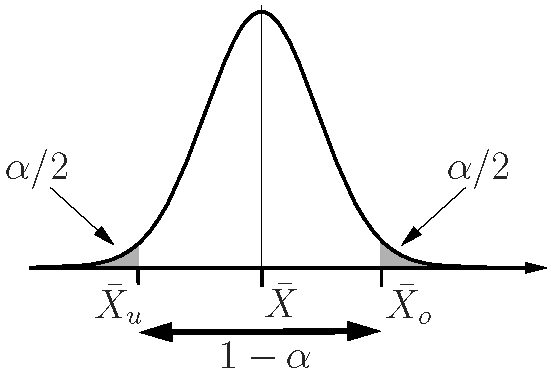
The well-known saying 'Don't trust statistics that you haven't falsified yourself' still reflects the attitude of many people towards the term 'statistics'. What is less well known is that statistics is a mathematically based theory of drawing conclusions from data about the underlying causes and correlations. The importance of statistical methods is growing with the flood of data that we are confronted with every day, but which science, technology, business and politics in particular have to deal with.
In this course, we will first review some mathematical basics from the field of probability theory. The basic modeling of statistics as well as the central methods of point estimation, confidence interval and test are then presented and explained using examples. The free statistical software 'R' will also be discussed. In the final lecture, Ms. Krüger from the University of Paderborn will present a survey technique that guarantees respondents anonymity in the case of 'embarrassing' questions. It will be shown how this topic can be dealt with profitably in school stochastics lessons. Data is collected and analyzed together. Surveys can be simulated in depth using the randomized response technique and students can be given an impression of how large the random variability of results can be in this type of survey.
Program
| 09.30 - 09.45 | Welcome |
| 09.45 - 10.45 | Probability theoretical basics of statistics (Prof. Dr. M. Kolonko) |
| 10.45 - 11.15 | Coffee break |
| 11.15 - 12.15 | Point estimation and confidence intervals (JProf. Dr. U. Ligges) |
| 12.15 - 13.30 | Lunch break |
| 13.30 - 14.30 | Statistical tests (Dr. Sandmann) |
| 14.30 - 15.00 | Coffee break |
| 15.00 - 16.00 | Honest answers to embarrassing questions - Anonymization of surveys with the randomized response technique (Prof. Dr. K. Krüger) |
| 16.00 - 16.30 | Discussion and closing remarks |
Topic
Assumptions, data, statistically verified findings
Event B3.140.MA1
Place
Institute of Mathematics at Clausthal University of Technology
Erzstraße 1
38678 Clausthal-Zellerfeld
Time
October 5, 2011
9:30 a.m. to 4:30 p.m.
Speakers
Herr Prof. Dr. M. Kolonko,
Herr JProf. Dr. U. Ligges,
Herr Dr. Sandmann,
Frau Prof. Dr. K. Krüger, Universität Paderborn
Contact
Dr. Henning Behnke
Institute of Mathematics
Erzstraße 1
38678 Clausthal-Zellerfeld, Germany
Phone: +49 5323 72-3183
Fax: +49 5323 72-2304
Email: behnke@math.tu-clausthal.de