
 Deutsch
 English
In order to concretize the expectations mentioned in the topic, we let two users have their say. Mathematics education explicitly means both school and university education. Dr. Kortemeyer's presentation will shed light on the transition between the two and the support offered by Clausthal University of Technology.
Prof. Dr. Christian Bohn, TU Clausthal, IEI
Everything is dynamic! Mathematics in systems theory and control engineering.
In engineering, dynamic systems always occur where - in the broadest sense - something moves, i.e. variables change over time. In control engineering, a basic subject in the curriculum of most engineering courses, the aim is to influence dynamic systems so that they exhibit a desired behavior. For this purpose, it is essential to mathematically describe ("model") dynamic systems independently of the specific application
and to analyze them on the basis of this mathematical description. The design of control algorithms, i.e. the synthesis of systems, is then based on this description and analysis. This article provides an insight into some basic problems and an overview of the mathematical tools used and the mathematical foundations required by the students.
Prof. Dr. Christian Rembe, TU Clausthal, IEI
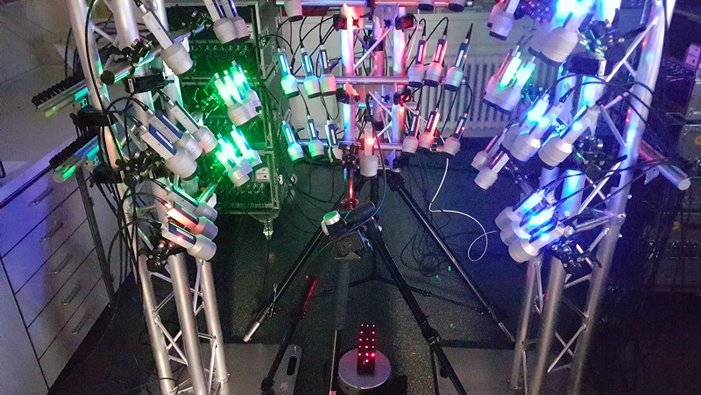
Basic mathematical knowledge for measurement technology
This lecture explains the mathematics required in measurement technology. The evaluation of measurement series and the treatment of measurement signals will be discussed. The mathematical description of sensors is also explained. Finally, the math tools that a high school graduate should have from the point of view of measurement technology in order to successfully complete their studies will be presented. It will also be discussed which mathematical methods, from the point of view of measurement technology, are better introduced during the course of study.
Dr. Jörg Kortemeyer, TU Clausthal, IFM
Hochschuldidaktik Mathematik - Perspektiven auf die Studieneingangsphase
In recent years, many mathematical support measures have been developed for students in the transition from school to university to help them get a successful start to their studies. The lecture will present several such support measures and survey instruments as well as research results. There will be a special focus on two aspects: On the one hand, mathematical pre-course concepts and projects as well as current results from a survey at Clausthal University of Technology on mathematics skills at the beginning of studies will be presented. On the other hand, results will be presented on the way in which school modeling concepts such as the modeling cycle can be transferred to requirements in basic engineering courses.
Dr. Kortemeyer has worked at the Competence Center for University Didactics in Mathematics in recent years and has coordinated the "Mathematics for Engineers" exercise program at Leibniz Universität Hannover over the past ten years, as well as conducting preliminary mathematics courses aimed at engineering students at the universities of Paderborn and Hannover.
Program
| 09.30 - 09.45 | Welcome |
| 09.45 - 10.45 | Everything is dynamic! Mathematics in systems theory and control engineering. (Prof. Dr. Christian Bohn) |
| 10.45 - 11.15 | Coffee break |
| 11.15 - 12.15 | Basic mathematical knowledge for measurement technology (Prof. Dr. Christian Rembe) |
| 12.15 - 13.30 | Lunch break |
| 13.30 - 14.30 | University didactics in mathematics - perspectives on the introductory phase of studies (Part 1; Dr. Jörg Kortemeyer) |
| 14.30 - 15.00 | Coffee break |
| 15.00 - 16.00 | Mathematics didactics in higher education - perspectives on the introductory phase (Part 2; Dr. Jörg Kortemeyer) |
| 16.00 - 16.30 | Discussion and closing remarks |
Registration and material download
User registration
Please enter the access data provided on the teacher training course in order to access the materials for this course.
Insert registration field
Topic
Successful STEM studies: Expectations for mathematics education
Event KBS911079
Place
Institute of Mathematics at Clausthal University of Technology
Erzstraße 1
38678 Clausthal-Zellerfeld
Time
March 13, 2019
9:30 a.m. to 4:30 p.m.
Speakers
Herr Prof. Dr. Christian Bohn,
Herr Prof. Dr. Christian Rembe,
Herr Dr. Jörg Kortemeyer
Contact
Dr. Henning Behnke
Institute of Mathematics
Erzstraße 1
38678 Clausthal-Zellerfeld, Germany
Phone: +49 5323 72-3183
Fax: +49 5323 72-2304
Email: behnke@math.tu-clausthal.de