
 Deutsch
 English
The simulation of processes on the computer and the associated numerical solution of mathematical problems has developed into a central pillar of scientific work in recent decades. On the one hand, the course will discuss the necessary basic knowledge (in particular the problem of limited computational accuracy), and on the other hand, it will provide insights into current research and fundamental developments that can be used as examples in teaching. In particular, the following 4 lectures are planned:
Prof. Dr. Angermann:
How do the numbers get into the computer? -Computer numbers and computer arithmetic
Probably the most widespread form of representing real numbers in the (digital) computer is based on the so-called floating point number system. The set of floating-point numbers is a subset of rational numbers in which corresponding versions of the standard arithmetic operations with real numbers are defined (floating-point arithmetic). In addition to basic information about floating-point numbers and arithmetic, the lecture presents some - sometimes surprising - consequences for the management of practical calculations, for example in numerical simulations.
Prof. Dr. Herget:
Errors are to be expected!
In math, as everyone knows, all numbers are very precise - there is complete accuracy and certainty. However, this accuracy and certainty is inevitably lost when math gets involved with the rest of the world (and the limited arithmetic of calculators and computers): Then most of the numbers that occur are inevitably only of limited accuracy, and the results obtained in this way are correspondingly inaccurate (what is this based on?). This also needs to be taught in mathematics lessons - even if it is (even) more uncomfortable than the other view, precision mathematics.
Prof. Dr. Westphal:
After the game is before the game - mathematical methods for optimizing Bundesliga match schedules
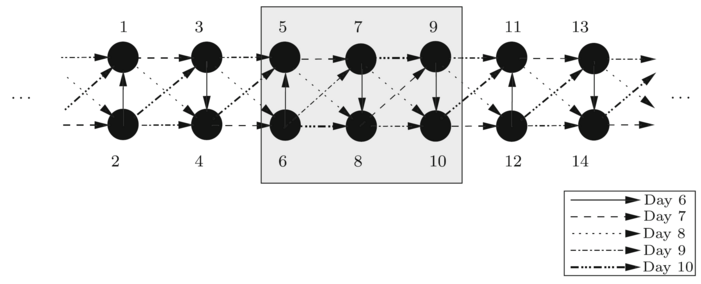
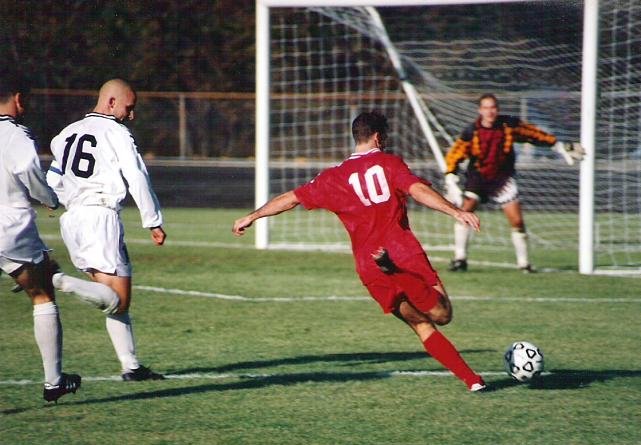
Designing an optimal match schedule for the Bundesliga as well as an optimal school timetable is a difficult mathematical problem that has to take into account a wide range of different circumstances. In the lecture we will get to know different approaches to solving such problems. We will look at the creation of match schedules without a computer as well as the computer-aided search for the best variant by solving systems of equations with thousands of variables and equations.
Prof. Dr. Ippisch:
Supercomputers - trends and applications
The computing power and complexity of supercomputers has steadily increased in recent decades. Today, they consist of tens of thousands of multiprocessor multicore computers, some of which are equipped with additional accelerator cards. The computing power corresponds to that of several million desktop computers. In this block, current trends in the development of supercomputers and relevant applications will be discussed. The material used can also be made available for teaching purposes.
Program
| 09.30 - 09.45 | Welcome |
| 09.45 - 10.45 | How do the numbers get into the computer? - Computer numbers and computer arithmetic ( Prof. Dr. L. Angermann) |
| 10.45 - 11.15 | Coffee break |
| 11.15 - 12.15 | Errors are to be expected! (Prof. Dr. W. Herget) |
| 12.15 - 13.30 | Lunch break |
| 13.30 - 14.30 | After the game is before the game - mathematical methods for game plan optimization in the Bundesliga (Prof. Dr. S. Westphal) |
| 14.30 - 15.00 | Coffee break |
| 15.00 - 16.00 | Supercomputers - trends and applications (Prof. Dr. O. Ippisch) |
| 16.00 - 16.30 | Discussion and closing remarks |
Registration and material download
User registration
Please enter the access data given on the teacher training course in order to access the materials for this course.
Insert registration field
Topic
Numerics, computers, simulations – what supercomputers and soccer have in common
Event KBS512059
Place
Institute of Mathematics at Clausthal University of Technology
Erzstraße 1
38678 Clausthal-Zellerfeld
Time
March 18, 2015
9:30 a.m. to 4:30 p.m.
Speakers
Herr Prof. Dr. L. Angermann,
Herr Prof. Dr. W. Herget,
Herr Prof. Dr. O. Ippisch,
Herr Prof. Dr. S. Westphal
Comment
The cost of participation is €25 per participant and will be billed via the Braunschweig Teacher Training Competence Center (KLBS).
Registration is open until March 6, 2015, at vedab.nibis.de.
Direct link: vedab.nibis.de/veran.php?vid=659
Contact
Dr. Henning Behnke
Institute of Mathematics
Erzstraße 1
38678 Clausthal-Zellerfeld, Germany
Phone: +49 5323 72-3183
Fax: +49 5323 72-2304
Email: behnke@math.tu-clausthal.de